




S1 • E1
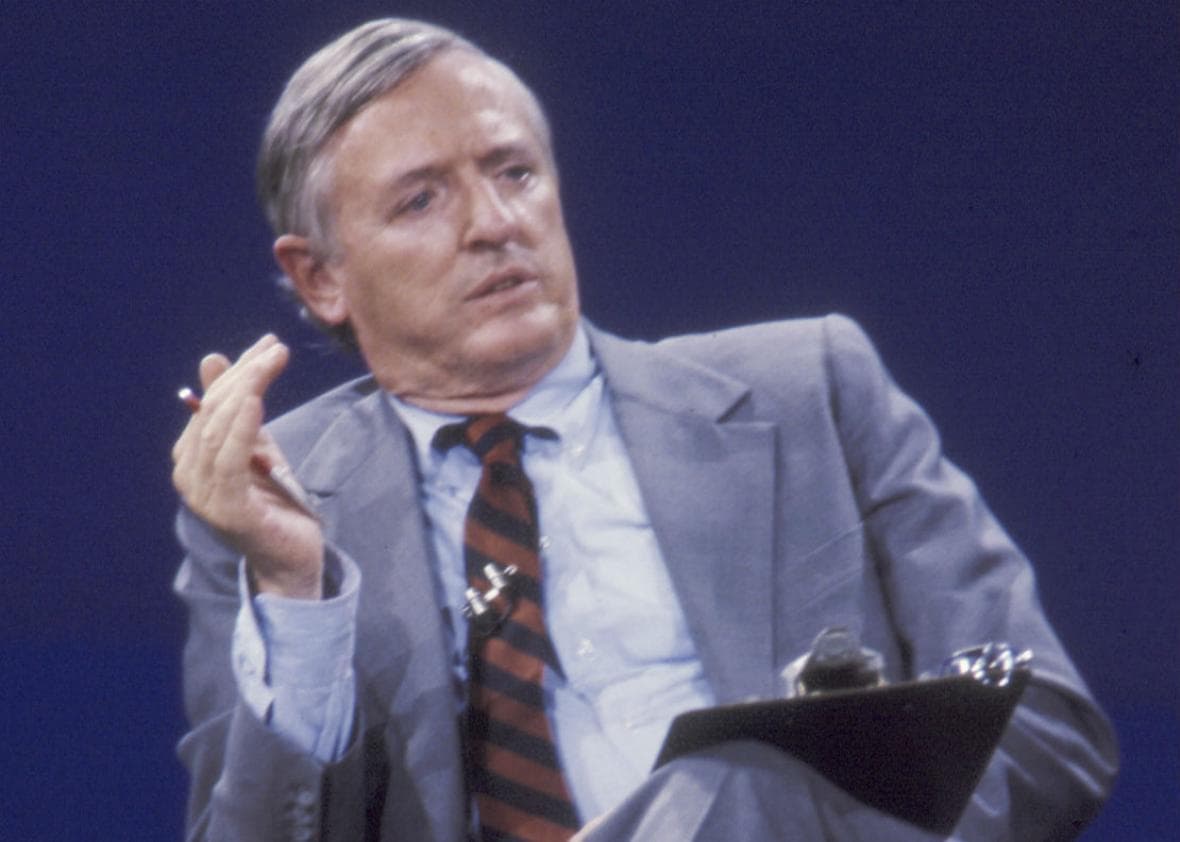
After the unveiling of President Lyndon B. Johnson's "War On Poverty," host William F. Buckley debates Michael Harrington, the author of "The Other America," on the issue of whether the United States government can assuage the hardships of impoverished citizens through federal initiatives.

S1 • E2
The controversial Bishop James A. Pike of the Episcopal Church presents his views on the subject of school prayer and the First Amendment.

S1 • E3
Guest Norman Thomas, six-time Socialist Party candidate for President, debates William F. Buckley on America's involvement in the Vietnam War, which Thomas opposes.

S1 • E4
Steve Allen, host of "The Tonight Show," states his objections to the death penalty. Although Allen was an entertainer, he was also a social critic. Allen discusses whether the death penalty deters crime and the role of moral agency.

S1 • E5
William F. Buckley debates civil rights activist James Farmer on the controversial "affirmative action" policy and whether it supports substantive equality for the socio-economically disadvantaged or is it a form of reverse discrimination.

S1 • E6
John Henry Faulk was a victim of the anti-Communist organization called Aware, which had brought him to the attention of the House Committee on Un-American Activities. Mr. Faulk sued Aware and was awarded "the most colossal judgment in libel history". He is now seeking the abolition of the committee which is the topic of this show.

S1 • E7
Buckley and David Susskind debate whether a liberal bias exists in the media. Susskind argues a liberal consensus exists among academics since the Progressive Era. Buckley insists a deeper bias exists that predates the Age of Enlightenment.

S1 • E8
Writer and presidential advisor Richard N. Goodwin defends the "The Great Society", a series of domestic programs enacted by President Lyndon B. Johnson with the goal of eliminating poverty and racial injustice in the United States.

S1 • E9

S1 • E10
Leo Cherne deplores Joseph McCarthy's excesses; in particular, McCarthy's wild accusations that Dwight Eisenhower, George Marshall, and Dean Acheson were communist agents. Cherne then discusses the merits of McCarthyism in an open society.
S1 • E11
William F. Buckley debates outspoken opponent if the Vietnam War, Staughton Lynd, who recently returned from a controversial visit to Hanoi, on peace negotiations.
S1 • E12

S1 • E13

S1 • E14
S1 • E15
S1 • E16
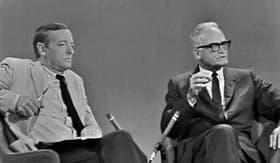
Former senator Barry Goldwater dryly estimates and tabulates the Republican Party's 1968 electoral prospects. A deferential Buckley solicits Goldwater's thoughts on Medicare and executive power.

S1 • E17

S1 • E18
S1 • E19

S1 • E20
S1 • E21

S1 • E22
Dore Schary, the director of The Anti-Defamation League, defends his recent book on the subject of right-wing extremism in the U.S. Buckley objects to Schary's contention that Barry Goldwater's 1964 campaign was dominated by extremists.

S1 • E23

S1 • E24

S1 • E25
S1 • E26
Buckley interviews a pipe-smoking Hugh Hefner on the topics of the Playboy Philosophy, the Sexual Revolution of the 20th century, and the utility of moral codes. Near the end of the program, Buckley contends that Hefner's espoused beliefs are inconsistent with the rigid guidelines for female employees at Hefner's clubs.

S1 • E27

S1 • E28

S1 • E29
Should Red China be admitted to the United Nations, at the expense of expelling Nationalist China? Max Lerner is the guest.

S1 • E30
Seymour Melman, professor of industrial engineering at Columbia University, talks about disarmament .

S1 • E31

S1 • E32

S1 • E33

S1 • E34

S1 • E35

S1 • E36
New York disc jockey Murray the K discusses modern teen-agers and their communication problems.

S1 • E37
Robert Novak, co-author of "LBJ: Exercise of Power," talks with William F Buckley Jr. about the future of the Republican Party and possible GOP candidates for the Presidency in 1968.

S1 • E38
Sir Arnold Lynn, author of "Now I See," talks about the influence of political and religious ideas on international sports.
S1 • E39
Mark Lane, the author of "Rush to Judgment," discusses his claims about John F. Kennedy's death. Buckley and Lane debate the accuracy of the Warren Report, the competence of Chief Justice Earl Warren, and the political context of Lane's investigation.


Self - Host

Self

Self - Panelist

Self - Moderator
Self - Moderator
Self - Moderator
Self - Moderator
Self - Panelist
Self - Panel
Self - Panelist